Tools.
What runs on the infrastructure.
Every tool here is an implementation inside one stable architecture. Some are methods. Some are software. Some are AI agents. Each one grows from the Lab’s research, follows the Continuity standards, and answers to a person as well as a model. Each one states what it is and where it stands.
The layers
The Lab produces the knowledge. The RoutePack holds it. The standards determine whether it can be trusted. The tools use it.
- KnowledgeRoutePacks
Verified records of how someone actually reaches a service: requirements, decisions, coordination points, owners, evidence, and failure points. Produced by the Lab, held to the standards.
How a RoutePack is made→ - AccessCivikAccessIn private beta
The public-facing coordination layer. It helps people see where to go and what happens next, and gives organizations shared infrastructure to coordinate each person's next step.
Read the case study→ - AccountabilityCoordination accountability
Preserves responsibility as organizations coordinate: who holds the next step, and the record that shows it.
Where it stands→ - IntelligenceAI models and local infrastructure
Software and AI that reason over verified routes with every step present, and answer to a person as well as a model.
Where it stands→ - MethodsContinuity Systems Design and verification
How routes are described, verified, maintained, and improved: the standards and methods every other layer follows.
Explore the standards→
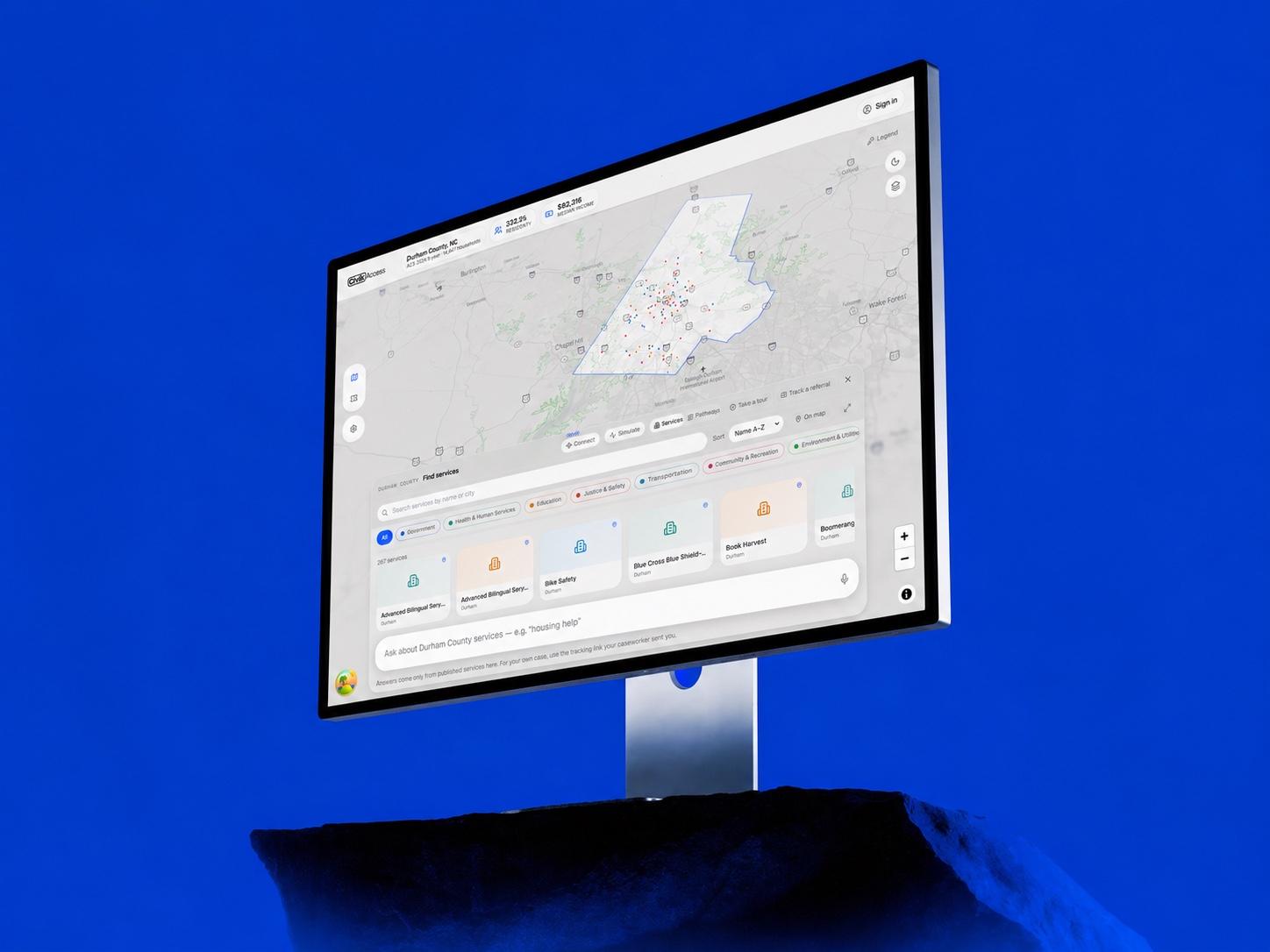
Access · The public-facing coordination layer
CivikAccess
CivikAccess is the public-facing coordination layer: the software that puts verified routes and the Foundation’s standards to work, so people can see where to go and what happens next. It is built and owned by the Foundation, which is also the only organization operating it. It is in private beta.
Implementations
Each tool below is an implementation of one of the layers above. Its case study says what it is, why it exists, and where it stands.